오늘 되게 흥미로운 글을 봤다.
한 번쯤은 봐도 좋은 글이니 공유함
Who has COVID-19 in South Korea? 😷
Explore and run machine learning code with Kaggle Notebooks | Using data from [NeurIPS 2020] Data Science for COVID-19 (DS4C)
www.kaggle.com
Main Conclusion을 보면 필자가 Information on the number of contacts is inaccurate so much that we cannot draw a meaningful conclusion except라고 적어놓았다. 즉, 필자가 아직 고충하고 있는 점은 R을 활용해서 data analyisis에
visual(시각화)까지 엄청 잘 해놓았지만 좋은 insight가 없다는 점.
Problem:
"Who is infected?"
"How did these people get infected?"
"How long does the average duration of treatment take?"
"How many people can get infected with one person with coronavirus?"
를 밝히기위해 주어진 information들 (Sex, Age , Region)들은 분명 정확히 시각화가 되었지만 특별한 Solution이 없다.
접촉자 수가 너무 많은 불특정다수이기 때문에 예측하기 어렵다는 점은 충분히 이해하지만
분명 kaggle best급의 data analysis Index를 올려놓고 좋은 insight를 도출해서 적지 않았다는 점이
의아했다. 나는 이 Index면 machine learning으로 어느 정도 충분한 insight를 내놓는 것이 가능하다고 봤기 때문이다.
물론 외부 환경이 계속 유지된다는 가정을 해야 도출되는건 맞지만 현재도 계속 서울 제외 3단계로
통제 한다는 것을 보면 이태원이나 교회 집단 감염을 통한 확산 같은 특수 경우를 제외 할 경우
축적된 Data를 활용해 insight와 prediction graph (SIR모델도 써야되지만) 충분히 가능하다본다.
(물론 외부 환경을 정확히 통제 변인에 고정 할 수는 없기에 100% 완벽한 예측 결과를 도출하는것은 불가능하다.
그러니까 이 사람도 못했을것이고)
그래서 검색해봤다.
covid-19 machine learning project github

내가 생각 할 수 있는거니까 당연한거지만 이미 너무 많은 깃헙과 논문들이 있었다.
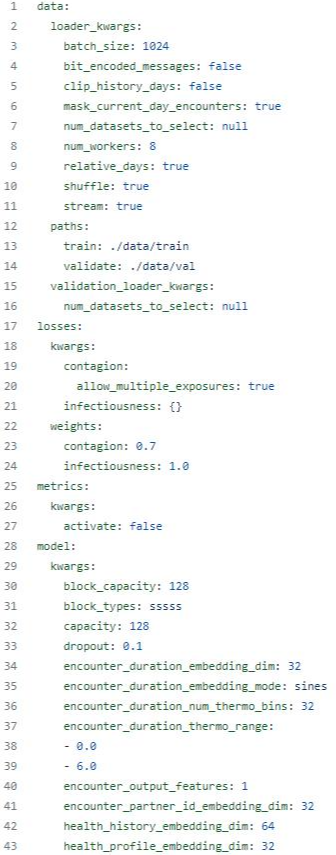
아래 내용은 검색 1페이지에 올라오는 제일 첫번째 글인데 This repository provides models, infrastructure and datasets for training deep-learning based predictors of COVID-19 infectiousness as used in Proactive Contact Tracing 이라
적혀있다. 말 그대로 예측 변수 도출해주는 machine learning이다.
COVI-ML
This repository provides models, infrastructure and datasets for training deep-learning based predictors of COVID-19 infectiousness as used in Proactive Contact Tracing.
What's in the Box
Models
We provide architectural scaffolding around deep-sets (DS), set-transformers (ST) and DS-ST hybrids.
Training Infrastructure
The core training infrastructure is built with speedrun. It supports experiment tracking with Weights and Biases & tensorboard, and hyperparameter sweeps with Weights and Biases Sweeps.
Datasets
The training data is derived from COVI-AgentSim, an agent based simulator built with contact-tracing benchmarking and epidemiological realism in mind. We will include a dataset (download to appear soon); but in the mean time, you can print your own datasets by following instructions in the COVI-AgentSim repository.
The training and validation data is structured in directories containing zarr datasets. There is some flexibility here (see below), but we expect two directories ./data/train and ./data/val, where each directory should contain an arbitrary number of zarr files